Pedestrian Crossing Button
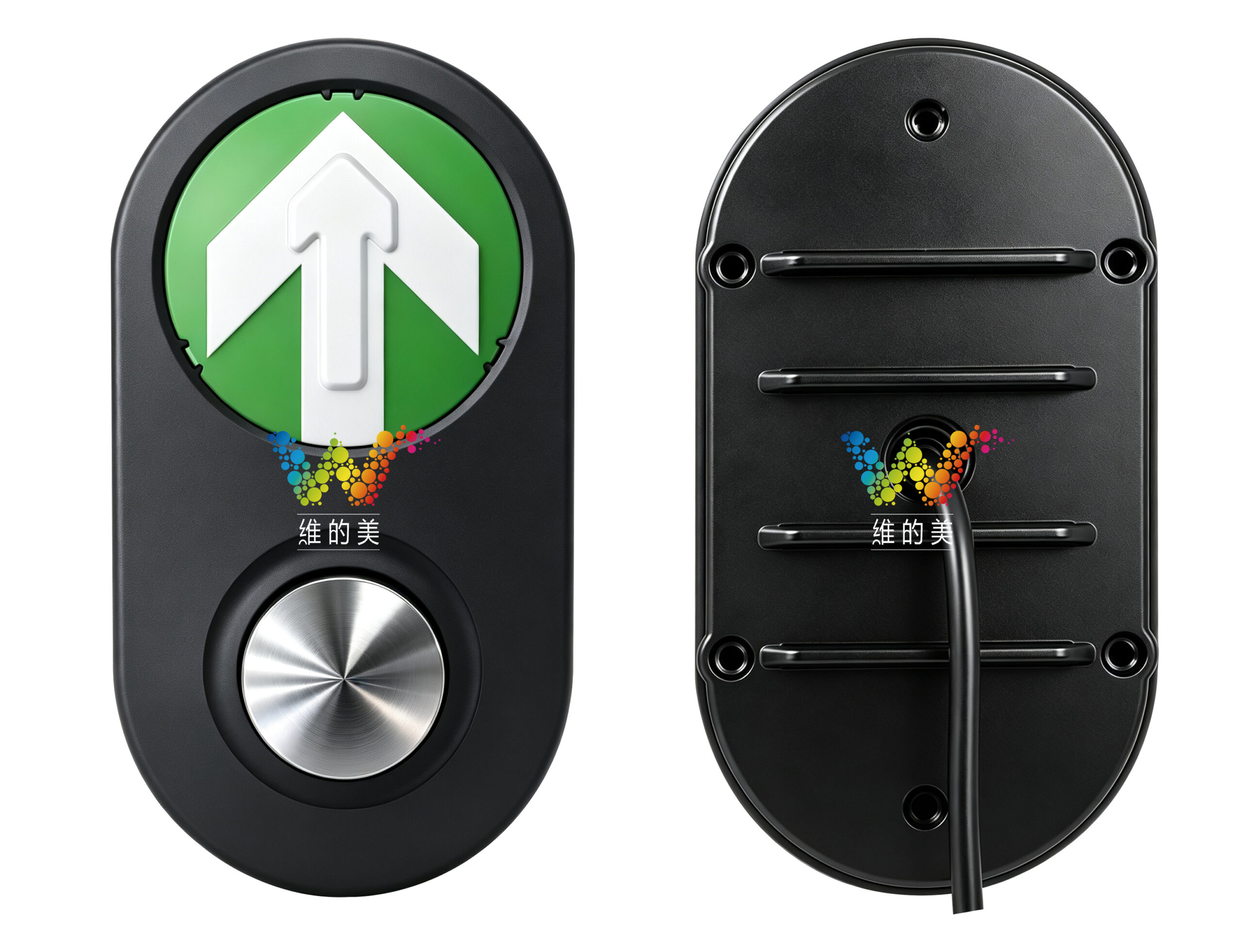
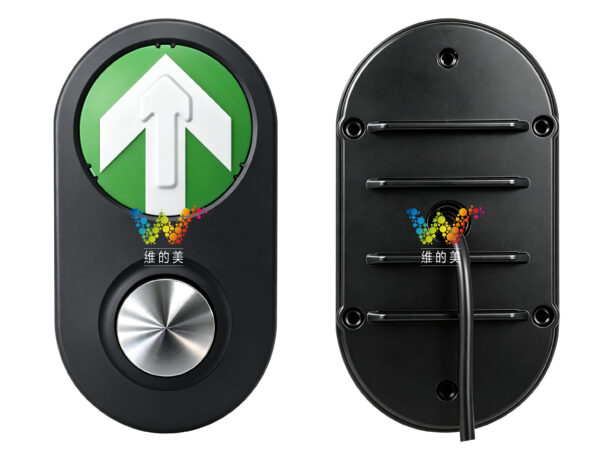
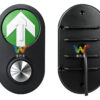
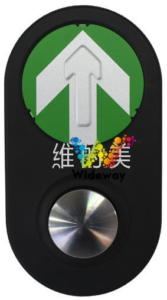
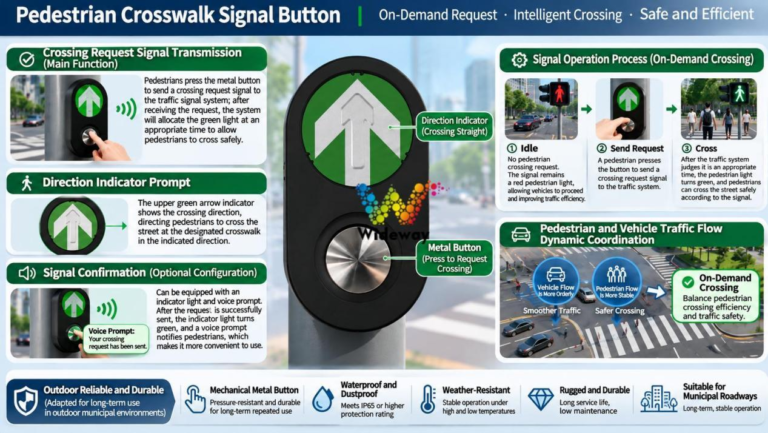
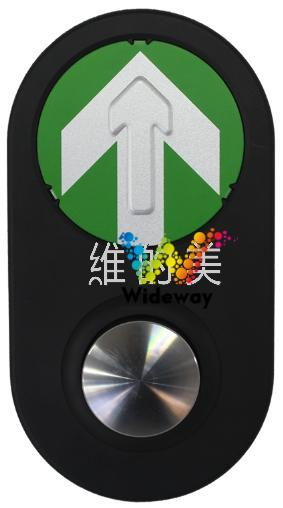
Pedestrian crossing button: when a pedestrian presses the metal button, they send a crossing request to the traffic signal unit; upon receiving the request, the signal unit switches the pedestrian green light in coordination with traffic flow and timing rules; when no pedestrian request is received, the signal unit gives priority to motor vehicles, thereby improving intersection throughput. This system is suitable for intersections and T-junctions with high pedestrian flux and heavy vehicle traffic, as well as campus entrances and exits. (As shown in the figure below.)
Product Functions of Pedestrian Crosswalk Buttons
Street-crossing signal transmission request (primary function):When pedestrians press a metal button, they send a crosswalk request signal to the traffic signal at the intersection; upon receiving the request, the signal controller follows a preset timing logic to switch the pedestrian green light to the motor vehicle red light at an appropriate time, thereby allowing pedestrians to cross. When no pedestrian presses the button, the signal controller maintains motor vehicle priority, preventing the pedestrian green light from remaining unoccupied and thereby improving road traffic efficiency.
Traffic-direction signs indicate:The green straight-ahead arrow symbol in the upper section provides an intuitive indication to pedestrians that this button corresponds to the straight-through pedestrian crossing, thereby clarifying the direction of travel.
Signal confirmation (optional accessory):Some versions can be paired with indicator lights and a voice-announcement module for the visually impaired; when pressed, they provide audio and visual feedback indicating that the request has been successfully received, making Pedestrian Crossing Button easier for visually impaired pedestrians to use the device.
Reliable outdoor triggering:Mechanical metal buttons that withstand prolonged repeated pressing; the entire unit is dust-and water-resistant, suitable for outdoor environments, and provides continuous, stable signal triggering, making Pedestrian Crossing Button ideal for long-term use at municipal intersections.
Dynamic coordination of pedestrian and vehicle traffic:For intersections with unstable pedestrian flow and high traffic volume, implement demand-based signal phasing to balance motor vehicle traffic efficiency with pedestrian crossing safety.
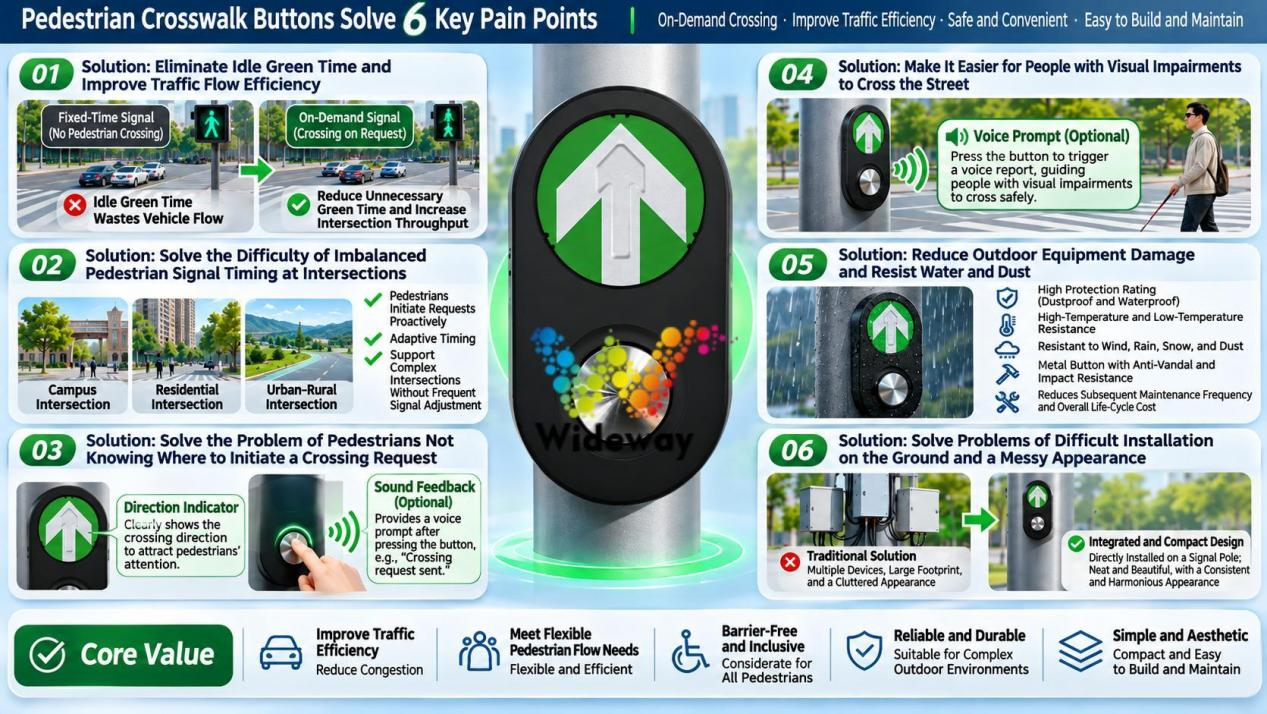
Pedestrian crossing buttons can address the core pain points faced by customers.
Unbalanced traffic flows make Pedestrian Crossing Button difficult to adjust intersection signal timing
Pedestrian crossings at campuses, residential communities, and suburban road intersections occur intermittently, making fixed signal timing difficult to accommodate; by using a request button, pedestrians can actively initiate the crossing process, enabling the system to adapt to intermittent crossing needs without requiring frequent modifications to signal timing schemes.
Pedestrians do not know where they can submit a cross-street request.
The upper section features directional indicators that clearly indicate the direction for crossing the street, allowing unfamiliar pedestrians to identify Pedestrian Crossing Button at a glance; an optional audio-visual feedback version is available, providing an audible and visual prompt upon activation to inform pedestrians that “the request has been received; please wait.”
Outdoor equipment is prone to damage and offers poor waterproofing and dust resistance.
The entire unit features a high protection rating and is resistant to both high and low temperatures; Pedestrian Crossing Button can operate continuously in environments exposed to wind, rain, intense sunlight, and dust. Its metal buttons are resistant to repeated pressing and to accidental impact damage, thereby reducing the frequency of subsequent repairs and replacements and lowering operating and maintenance costs.
Installation takes up a large amount of space and has a cluttered appearance.
An integrated, compact, elongated oval enclosure that can be mounted directly to signal poles; Pedestrian Crossing Button offers simple installation and streamlined cabling, provides a clean and orderly overall appearance at intersections, and is compatible with standardized municipal renovation projects.
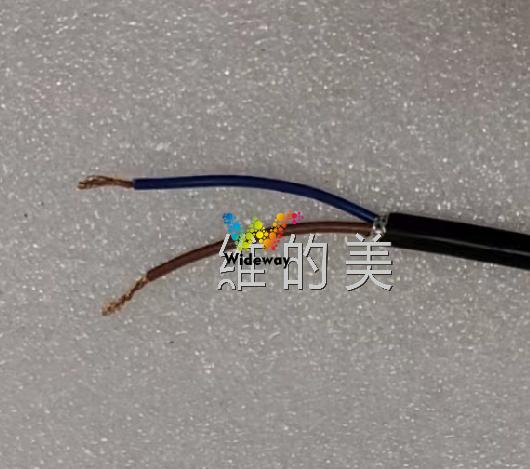
Wiring Instructions for Pedestrian Crossing
Brown and blue are switch signal lines; do not connect them. source.
Installation Instructions

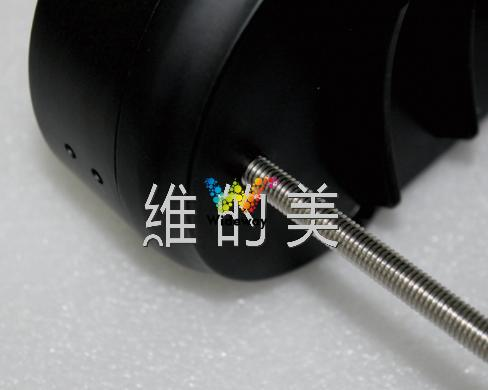
1.First, slide one end of the screw into the hole on the back of the button; once the screw is properly seated, connect the switch wires and insert them into the vertical post.
2. Then, insert the other end of the screw into the upright rod, followed sequentially by the washer, spring plate, and nut; tighten the nut to complete the assembly. (As shown in the figure.)
Pedestrian Crossing Button Usage Precautions
This product features an aluminum casing; heavy pressure should be strictly avoided to prevent damage to the casing. The device must be powered on only under the supervision of a qualified professional; do not disassemble or assemble the luminaire without authorization.
Pedestrian Crossing Button Warranty Terms
• Warranty Period: 3 years; the warranty covers only the main unit of the lighting fixture; accessories are not covered; custom-made products are excluded.
• Return Method: Customer returns
• Scope of Exclusion: Malfunctions resulting from human-induced damage or natural disasters are not covered under the warranty.
• Logistics Note: The shipping cost for returned items shall be borne solely by the shipper.
| Parameter | |
| Value | |
| Product Dimensions | |
| 220×120×60mm | |
| Switch Type | |
| Electromagnetic Switch | |
| Product Power |
| fittings of a machine | quantity | Notes |
| Crossing Button | 1 unit | Cross-street demand |
| certificate | 1 copy | As a certificate of material release upon qualification |
| product specification | 1 copy | Includes product technical specifications, illustrated installation steps, and a safety and maintenance guide. |