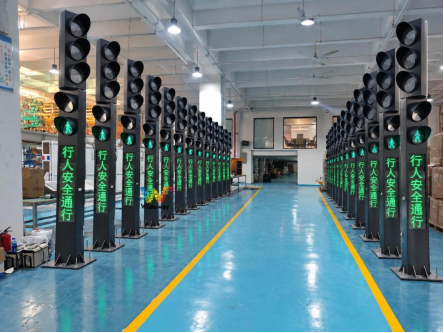
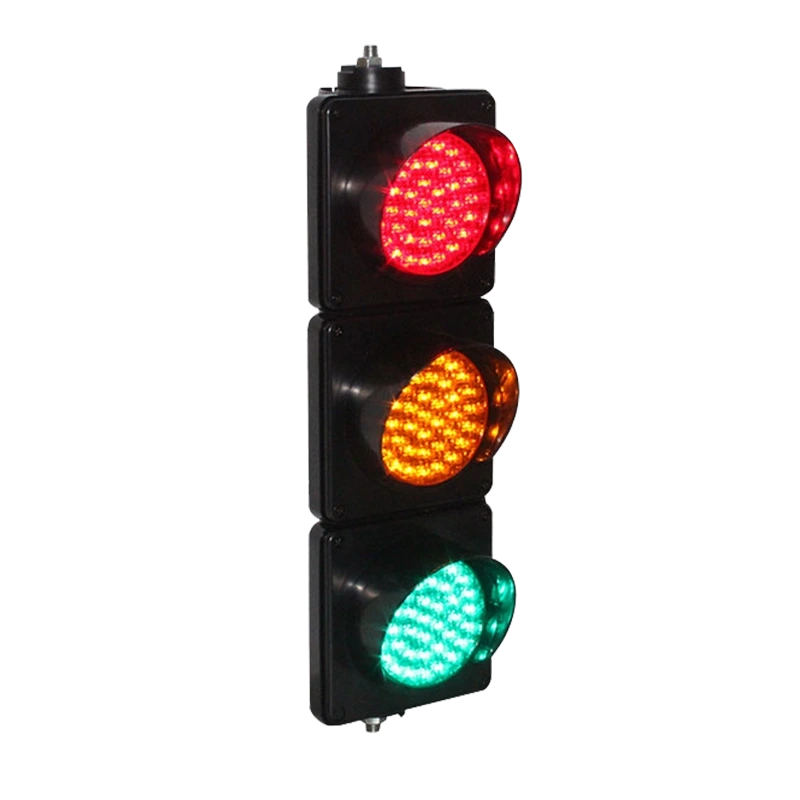
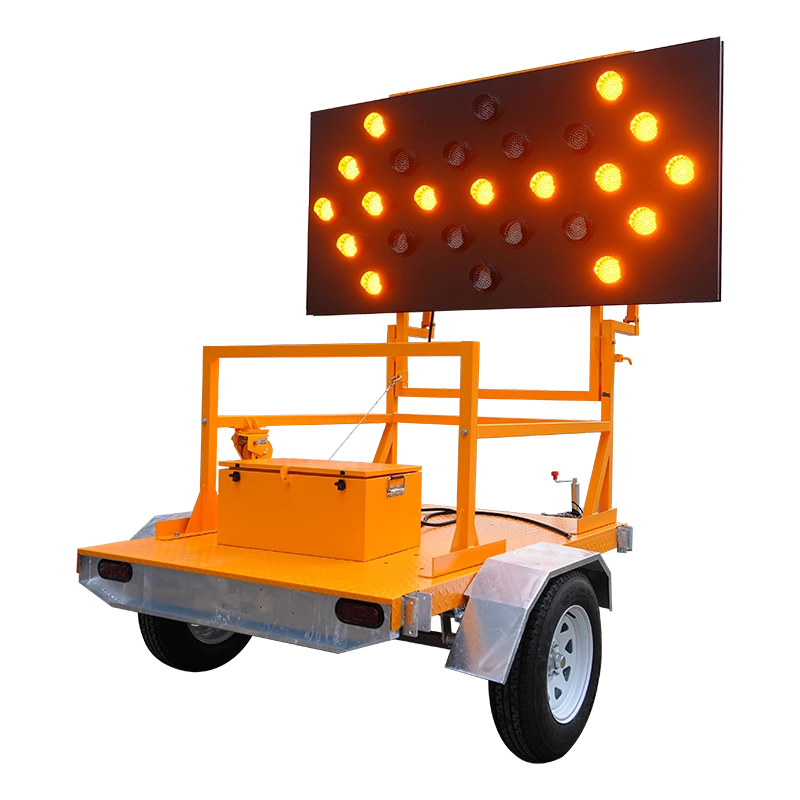
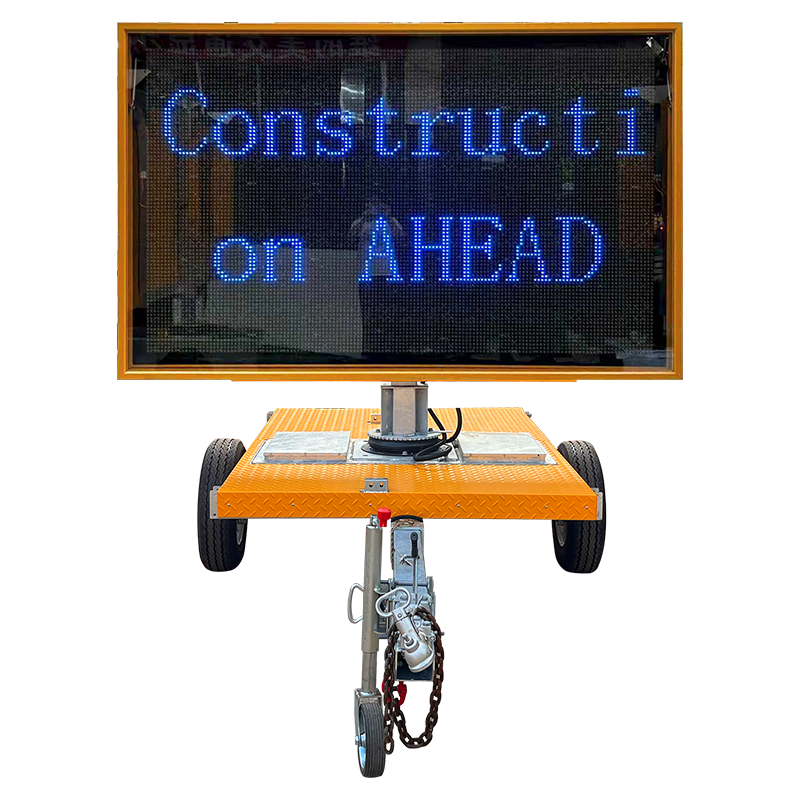
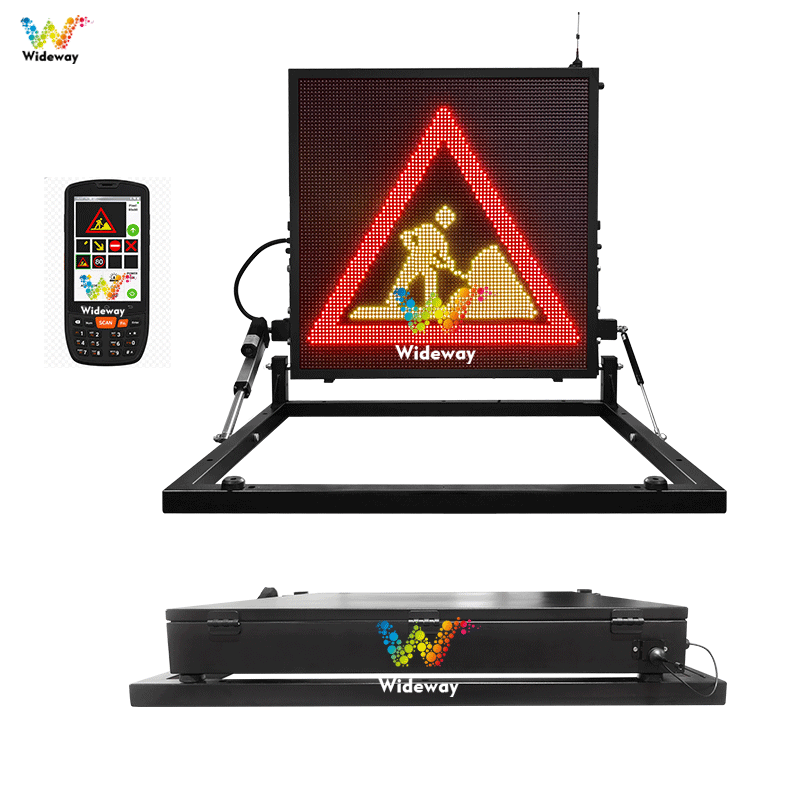
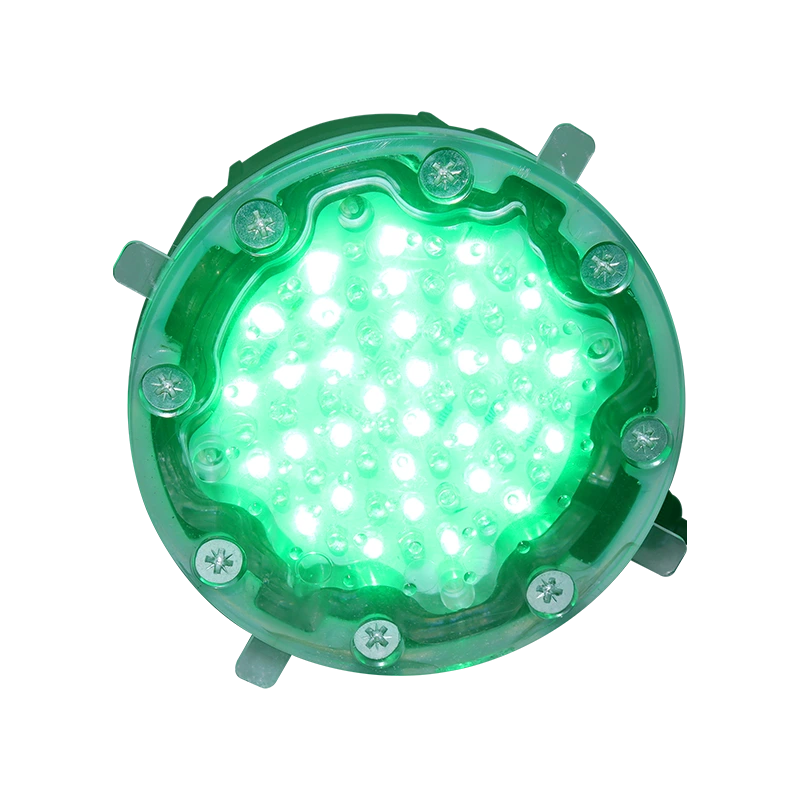
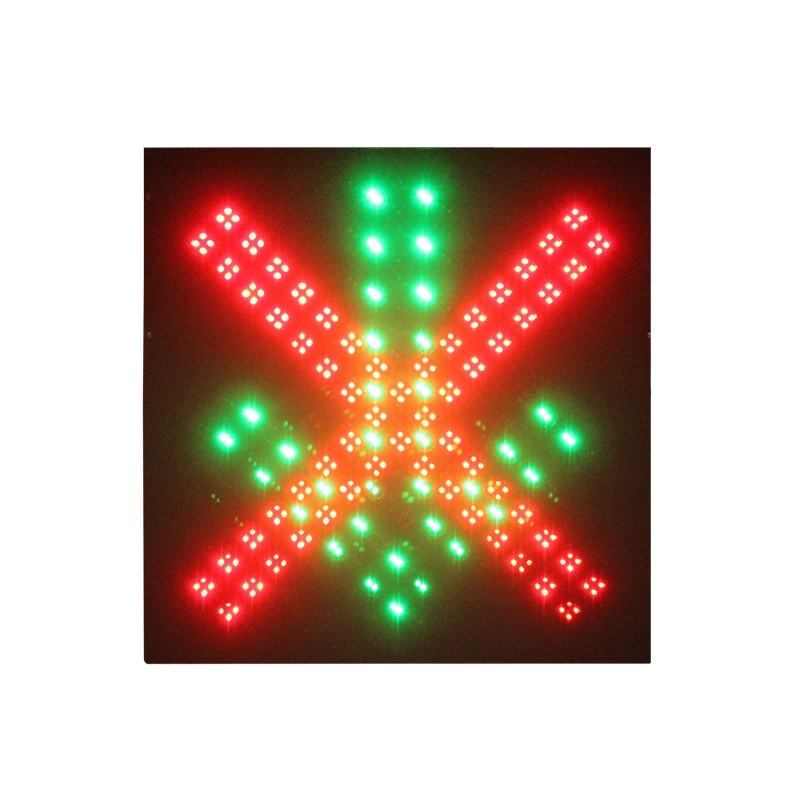
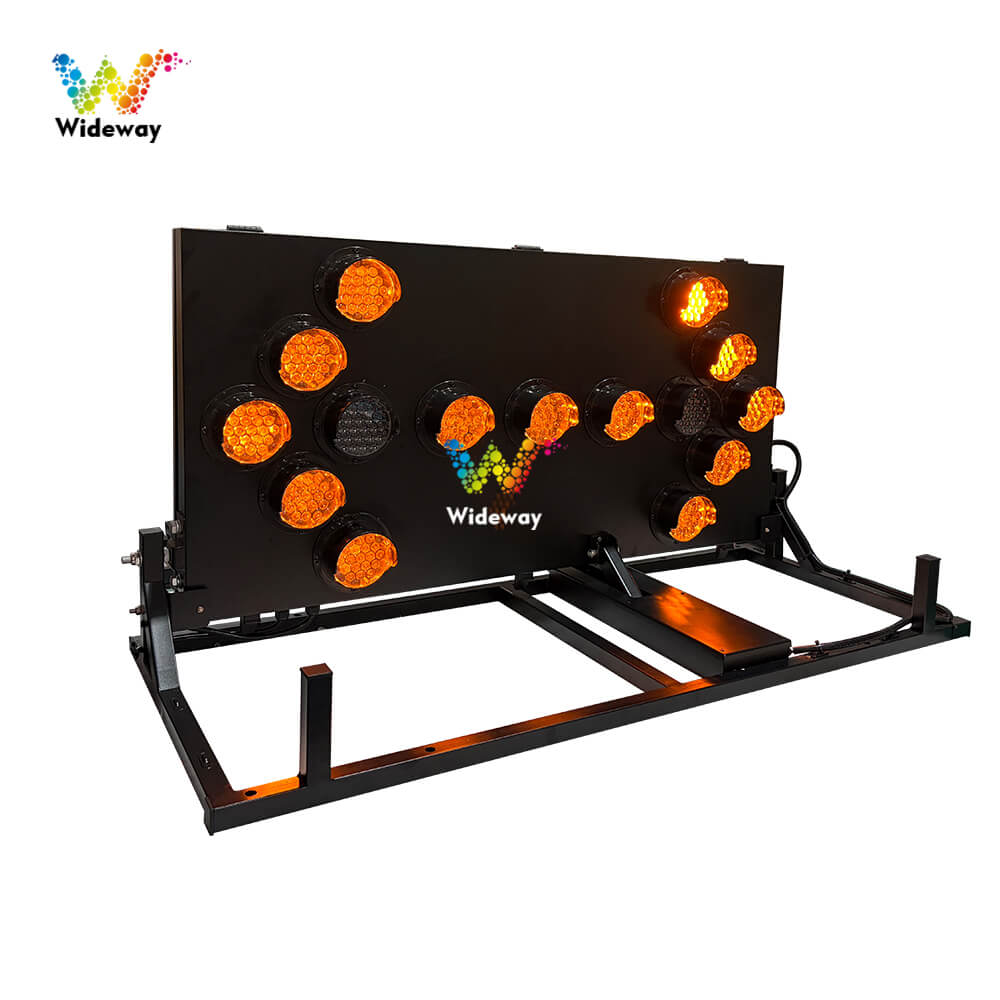
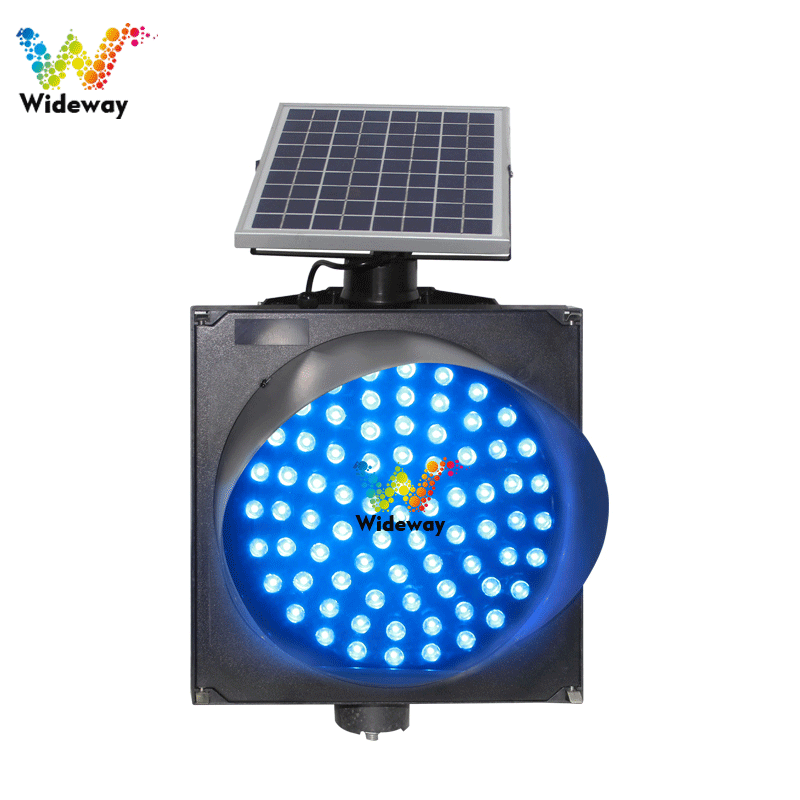
The integrated pedestrian signal pole combines a motor vehicle signal unit, a pedestrian signal unit, and a vertical LED text display screen into a single unit, providing a three-in-one solution for displaying motor vehicle traffic indications, pedestrian crossing instructions, and text-based warning alerts. This design addresses the common pain points associated with traditional intersections—such as excessive number of signal poles and cluttered utility wiring—and is suitable for urban intersection upgrades, smart crossing systems, and precision traffic management enhancement projects in commercial districts, campuses, or scenic areas. (As shown in the figure below)

Integrated pedestrian lighting product features
Red / Yellow / Green LED indicator:
Controls the stopping, warning, and release of motor vehicles; fully synchronizes with intersection signal timing sequences; complies with the national standard for traffic control logic.
High-brightness LED light source:
Large-diameter optical mask with anti-glare technology, ensuring clear long-range visibility even under intense daylight or in rainy, foggy conditions.
Automatic Light Sensitivity Adjustment (Optional):
Automatically adjusts the LED brightness based on ambient light levels – ensuring no glare at night and sufficient brightness during the day.
Red–Green Pedestrian Crossing Indicator:
Red standing figure = No entry; Green walking figure = Pedestrians may cross; provides intuitive indication of pedestrian access rights
Signal Timing Coordination:
Pedestrian traffic lights and motor vehicle traffic lights are synchronized in their timing sequence to prevent signal conflicts between pedestrians and vehicles.
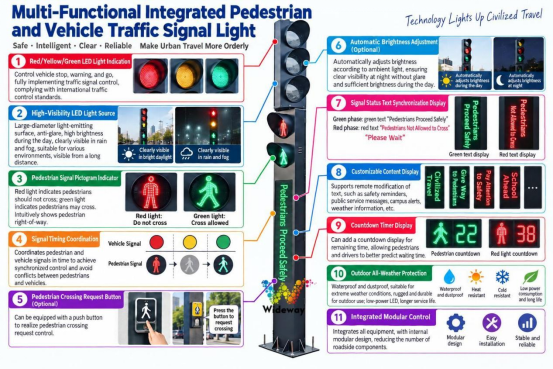
Crossing request trigger (Optional):
External pedestrian buttons can be installed to enable request-based crosswalk control.
Signal light status text-based synchronized announcement:
Green light phase: Green text – “Pedestrians may proceed safely”;
Red light phase: Red text – “Pedestrians are prohibited from crossing”; “Please wait patiently.”
Flexible, customizable content:
The backend allows for remote modification of slogans, supporting campaigns promoting civilized traffic behavior, campus safety warnings, and temporary traffic control notifications.
Two-color display:
Green lights display text in green; red lights display text in red – the color corresponds directly to the traffic status, providing a clear visual cue that makes it easier for elderly individuals or people with reduced visual acuity to identify the traffic conditions.
Countdown display:
It can display the remaining travel time digitally, enabling pedestrians and vehicles to anticipate the duration of their wait.
Full outdoor protection:
Waterproof and dustproof, suitable for outdoor operating conditions in heavy rain, high temperatures, and extreme cold; LED technology ensures low power consumption and an extended service life.
Integrated Control System:
A single pole integrates all equipment with organized internal wiring, reducing the number of pole components at intersections.
Internal Control Host Function
Signal reception and timing synchronization control:
Receives control signals from external traffic signal controllers and centrally manages the switching sequences for motor vehicle three-color lights, pedestrian signal lights, and vertical two-color LED display screens; ensures the synchronized, coordinated switching of red, yellow, and green lights along with corresponding prompt messages, eliminating issues such as discrepancies between light status and prompt text or misaligned signal sequencing; all devices are governed by a unified command system.
LED display driver and content management:
Drives a vertical dual-color LED display to switch between red and green instructional text based on the signal light status; stores preset instructional messages (e.g., “Pedestrian Safety Passage,” “No Entry,” etc.); supports remote text content modification via serial port or network connectivity, enabling online updates of civilized signage and temporary traffic control alerts.
Lighting power management and dimming control:
Implement power supply management and protection for each signal light LED circuit, including overvoltage, overcurrent, and short-circuit protection; integrate an optional photosensitive sensor to automatically adjust the brightness of signal lights and the display screen based on ambient light conditions – increasing brightness during daytime and reducing brightness at night to minimize glare; provide independent power supply protection for each circuit, ensuring that a failure in a single lighting fixture will not cause the entire system to malfunction.
Logical Security Protection:
Built-in conflict prevention logic: it stops the green light for vehicles and the walk signal for pedestrians from going on at the same time, preventing any hardware failures from causing traffic conflicts. There’s also a power-on self-check, which prevents random flashing or false alerts the moment it powers up, making sure the device enters normal control mode steadily.
Operation and Maintenance Debugging Feature:
Includes reserved debugging interfaces, supporting on-site local parameter configuration, screen text modification, and fault record retrieval – facilitating project debugging and subsequent maintenance and support.
Function of the sidewalk
Enhance crosswalk signage to improve visibility and ease of use:
Dual indication system (graphics + large vertical text): Traditional crosswalks rely solely on small red and green pictorial signs, which may be difficult for elderly individuals, children, or people with reduced visual acuity to discern from a distance; this product incorporates vertical LED text indicators (“Pedestrian Safety Crossing” / “No Crossing”) that can be easily read from afar, thereby reducing instances of pedestrians inadvertently crossing the crosswalk. The signal light is positioned at a greater height, ensuring a longer visual range even in crosswalk environments where pedestrians may be obscured by trees or vehicles, thus enabling pedestrians to clearly observe the signal status.
Standardize the flow of pedestrians and vehicles to reduce the risk of accidents on sidewalks:
The motor vehicle traffic signal system is integrated with the pedestrian signal system, featuring strictly synchronized signal timing to prevent confusion arising from inconsistencies between signals from different signal poles and to clearly define the release boundaries for both motor vehicles and pedestrians. This system provides clear management of crossing rights at zebra crossings, regulates the timing of pedestrian crossings, and alerts drivers to pedestrians crossing the sidewalk, thereby reducing conflicts between pedestrians and vehicles and lowering the incidence of traffic accidents at zebra crossings.
Key pain points that can be addressed for our customers
Solution: urban appearance challenges such as cluttered intersections and excessive utility poles.
A single pole integrates all equipment – including motor vehicle traffic signals, pedestrian traffic signals, and a vertical LED display screen – into one unit, reducing the number of poles and creating a clean, minimalist intersection design suitable for civilized city initiatives and street beautification and renovation projects.
Solution: Addressing the safety challenge posed by the lack of comprehensive cross-walk signage, which makes it difficult to identify vulnerable road users.
Using graphic lighting and large vertical text for double reminders: when the green light is on, it shows ‘Pedestrians Safe to Cross,’ and when the red light is on, it displays ‘No Crossing.’ The visual cues are clearer. You can also add a voice prompt module to help visually impaired people cross the street safely, reducing the risk of pedestrians running red lights and improving intersection safety.
Solution: the common project challenges of high construction costs, lengthy project timelines, and complex on-site wiring requirements.
The entire unit is prefabricated and shipped as a single assembly; installation is completed with just one foundation pouring and one lifting and wiring operation, thereby shortening the construction timeline, reducing civil engineering, piping, and labor costs, and minimizing the impact on traffic caused by on-site construction activities.
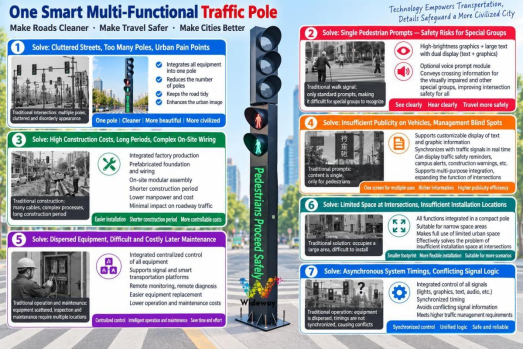
Solution: A management challenge characterized by insufficient public awareness and warning materials and weak effectiveness of traffic guidance measures.
The vertical LED screen supports remote online text content modification; it can simultaneously display traffic status or scroll through slogans promoting civilized travel, encouraging reduced speed, and issuing campus safety warnings, thereby integrating traffic management with safety awareness campaigns to assist traffic management authorities in conducting intersection guidance and management.
The entire system utilizes a single signal source; the lighting, patterns, and text are synchronized with the signal controller’s timing for seamless switching, ensuring no signal confusion. The traffic indication logic is uniformly standardized in compliance with national traffic management requirements.
Integrated pedestrian lighting system production time
Our company boasts a rapid production turnaround – while our client requested delivery within 7 days, we completed the order in just 5 days. We employ a customized, order-driven manufacturing approach, implementing standardized management across the entire production lifecycle – from structural sheet metal fabrication and light source module assembly to control system integration and final product aging tests – ensuring the long-term stable operation of our products in outdoor environments.
Integrated pedestrian lighting system debugging
On-site debugging: Our company has dispatched professional technicians to communicate directly with the client and perform the on-site debugging.
Motor vehicle and pedestrian lighting time adjustment: Open the maintenance door; press and hold the physical buttons on the mainboard (Settings / Up / Down / Confirm) to enter the menu; sequentially adjust the vehicle green, vehicle yellow, and vehicle red lighting settings; then adjust the pedestrian green and pedestrian red lighting settings; confirm to save and exit; the lighting unit will then automatically start a new cycle.
Complete timing example (for road section with crosswalk):
Motor vehicle green light: 35s
Motor vehicle yellow light: 3s
Motor vehicle red light (pedestrians go): 20s
Pedestrian green flashing countdown: 5s (will turn red afterwards)
All-red clearing: cycles every 2 seconds; when the pedestrian light turns green, the portrait screen automatically shows that pedestrians can cross safely; when the pedestrian light is red, it automatically switches to ‘no crossing.’ This text logic is tied to the signal phase in the built-in host program, so you don’t need to set the text separately.
Batch Aging